


ASTA Documentation Manchester Small Appliance Brands Prepare When Supplying BS1363 Fused Power Cords for UK Argos Market Entry
"We have seen too many small appliance brands from the Manchester area arrive at Argos buyer meetings with beautiful product samples but completely inadequate documentation packages. The result is a six-month delay in listing—sometimes fatal for a brand trying to hit the critical Christmas trading window." — A senior Argos category buyer, quoted in a UK Retail Supply Chain Report 2025.
David Chen
Senior Compliance Engineer, Orient Electronics — 12 years in BS1363 power cord manufacturing and ASTA certification management
LinkedIn: Orient Electronics LinkedIn | Facebook: @OrientElec
Why BS1363 Fused Plugs Are Non-Negotiable for UK Retail Small Appliances
From my twelve years in power cord compliance engineering at Orient Electronics, I can tell you that the single most common reason small appliance brands fail their first Argos documentation review is that they underestimate how scrutinously the BS1363 plug itself is checked. We have supplied BS1363 fused power cords to UK retailers — including brands that eventually listed with Argos — for nearly two decades, and I have personally reviewed hundreds of ASTA test reports on both our own products and competitor submissions. The pattern is consistent: brands focus on the appliance, but Argos focuses on the cord.
If you are a small appliance brand based in or sourcing through Manchester, and your products carry any electrical load, the phrase "BS1363 compliant" will follow you through every stage of your UK retail journey. This is not a suggestion. It is a legal obligation under the UK Electrical Equipment Safety Regulations 2016 (GPSR), and it is enforced at multiple levels: at the port of entry by HMRC Customs, on the shelf by Trading Standards officers, and—most immediately relevant—at the buying desk by Argos.
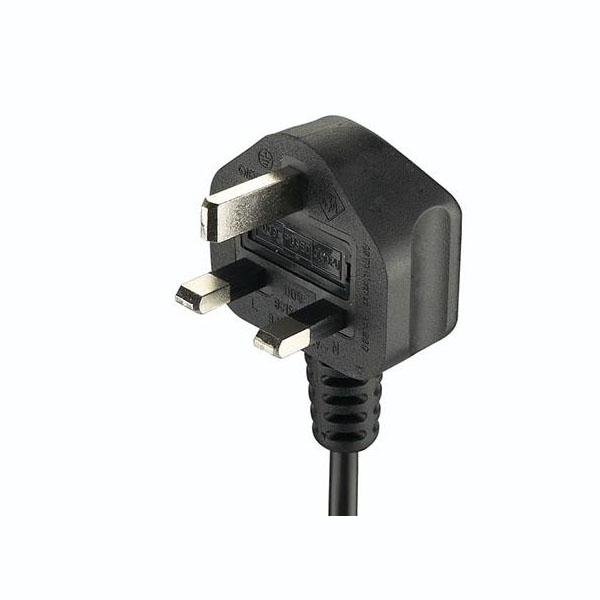
BS1363 is the British Standard that governs domestic plug and socket-outlet systems in the United Kingdom. What makes BS1363 distinct from plug standards in other markets is its fuse mechanism. Unlike the CEE 7/7 Schuko plug used across mainland Europe or the NEMA configurations common in North America, the BS1363 plug contains an internal 13A fuse that provides overcurrent protection specific to the appliance circuit. This fuse is not optional. It is a statutory requirement for any plug sold in the UK that is intended for connection to a 230V mains supply.
For small appliance brands—those manufacturing or sourcing kettles, toasters, irons, blenders, hand mixers, or any similar products—the BS1363 fused power cord is typically the first electrical component that an Argos buyer scrutinizes. The reason is straightforward: if the power cord fails, the entire product fails. And if the power cord is not properly certified, Argos carries the liability. Retailers like Argos have increasingly shifted supply chain compliance responsibility onto their vendors, which means an improperly documented BS1363 fused cord can expose the brand—not just to a rejected shipment, but to product recall costs, fines from Office for Product Safety and Standards (OPSS), and reputational damage that can end a retail relationship permanently.
Understanding the BS1363 Fused Plug Mechanism: What Actually Makes It Different

The BS1363 fused plug is a precision engineered device. Let me explain what our engineering team at Orient Electronics has learned from nearly two decades of manufacturing these components for the UK market, because understanding the mechanism helps you understand why the documentation requirements are so specific.
The 13A Fuse: Your First Line of Overcurrent Defense
The BS1363 plug contains a 13A ceramic or glass fuse element, dimensioned to BS 646 (or the equivalent international standard). The fuse is designed to rupture if the current flowing through the appliance exceeds 13 amperes, thereby protecting the appliance's internal wiring and preventing thermal overload that could lead to fire or electric shock.
Why does this matter for documentation? Because the fuse rating must be matched to the appliance's current draw. The relationship is not arbitrary. An appliance that draws, for example, 5 amperes at full load must use a 5A or 6.3A fuse—not a 13A fuse. Using an oversized fuse defeats the protection mechanism and is itself a compliance failure that an ASTA test report will catch. In my experience reviewing ASTA outcomes for our customers, this is the second most common finding on first-time test submissions — and it is entirely preventable with proper specification review at the product design stage.
Pin Dimensions and Material Composition
The BS1363 standard specifies precise dimensions for plug pins: each pin must be rectangular with rounded edges, measuring 6.35mm × 3.97mm (with tolerances of ±0.07mm on width and ±0.05mm on thickness), and made from brass or a brass alloy with a minimum nickel plating of 20μm for durability and conductivity. The pin length is specified at 25.4mm minimum from the face of the plug. These are not suggestions. An ASTA 1673 test report will physically measure every pin to verify conformance, and any deviation — however slight — triggers a non-conformance report (NCR). We maintain our own in-house pin gauging station that runs 100% dimensional checks on every production batch before we ship.
The Flexible Cable and Flex Anchorage
BS1363 specifies the flex anchorage requirements in Clause 12 of the standard, which demands that the flexible cable be anchored in such a way that the conductors cannot be pulled out of the terminations under a force of 80N for 60 seconds without the cable sustaining damage. For manufacturers, this means the cord anchorage mechanism must be engineered to pass a specific mechanical test. We design ours with a two-part strain relief system: a primary mechanical clamp and a secondary rubber boot that distributes load across the cable jacket. I have seen many manufacturers underestimate the importance of this detail, and in our industry it remains one of the most common reasons for ASTA test failure on first submission.
At Orient Electronics, we manufacture BS1363 fused power cords using our full range of BS1363 compliant products, with H05VV-F cable as standard for small appliance applications. H05VV-F offers excellent flexibility and durability for domestic appliance use, with a cross-section range from 0.75mm² to 1.5mm² depending on the current rating of the appliance. We hold ASTA 1673 certification across our entire BS1363 cord range, which means our customers can access certification documentation without undergoing independent laboratory testing.
What ASTA Certification Actually Covers: Reading the ASTA 1673 Test Report Correctly

ASTA stands for the Association of Short Circuit Testing Institutions, now part of Intertek's certification services. The ASTA 1673 test report is the definitive document that proves a BS1363 plug, socket, or fused power cord meets the requirements of the relevant British Standard. I have handled hundreds of these reports in my career, and I want to offer a perspective that brands often miss: the ASTA 1673 report is not a single test. It is a battery of approximately 25 individual tests, each specified in detail by the relevant standard (BS 1363-1).
Let me walk you through the key test categories that matter for your documentation package:
- Dielectric Strength Test (Clause 9): The plug is subjected to a voltage of 1,500V AC for 60 seconds between live parts and accessible metal parts. This verifies that insulation will not break down under fault conditions. The test must be conducted at a recognized test laboratory with calibrated equipment.
- Earth Continuity Test (Clause 10): The resistance between the earth pin and any accessible metal part must not exceed 0.05 ohms. This ensures that in the event of a fault, the earth path will safely carry fault current to trip the circuit breaker.
- Temperature Rise Test (Clause 11): The plug is operated at rated current (e.g., 5A for a small appliance cord) until thermal equilibrium is reached. Temperature rise must not exceed 45°C above ambient at any termination. Excess temperature rise indicates undersized conductors or poor terminations.
- Flex Anchorage Test (Clause 12): The cable must withstand an axial pull of 80N for 60 seconds without conductor withdrawal or cable sheath damage.
- Impact Test (Clause 13): The plug housing is subjected to a drop impact from a height of 100mm onto a rigid surface, repeated 4 times. The plug must not crack or become unsafe.
- Gauge Test (Clause 17): Plugs are checked against standard go/no-go gauges to verify pin dimensions and spacing meet the specified tolerances. This is a pass/fail test with zero tolerance for non-conformance.
- Fuse Performance Test (Clause 19): The fuse must interrupt a fault current of 35 times its rating within 0.3 seconds, verifying that the fuse provides the intended overcurrent protection.
When you receive an ASTA 1673 report from your manufacturer, you should verify that it covers the specific product variant you are ordering — not just a similar product in the same family. If you are ordering a 1.0mm² H05VV-F cord with a 5A molded BS1363 plug, the report must correspond to exactly that product description. Reports for 0.75mm² variants or 3A variants cannot substitute. I have seen this specific mistake cost a brand six weeks of delay and £4,500 in retesting fees.
Argos Compliance Requirements: What UK Retail Buyers Actually Check
Argos, as part of the JLP (J. Lewis Partnership) group, maintains rigorous product safety and compliance standards that exceed the baseline legal requirements. For electrical products, Argos operates a Supplier Compliance Manual that details documentation requirements for each product category. Understanding what Argos buyers and their compliance team actually look for can save you months of back-and-forth.
The Argos Documentation Package: Mandatory Components
When Argos Procurement receives a new product submission from an overseas supplier, they route it through their Technical and Compliance team. Based on what I have seen across dozens of customer submissions, the documentation package they require typically includes:
- ASTA 1673 Test Report (original PDF, not a scan) — the primary proof of electrical safety conformity
- CE Declaration of Conformity (updated to UK-specific GPSR format since Brexit) — signed by the manufacturer's authorized representative
- UKCA Declaration of Conformity — required for products placed on the GB (England, Scotland, Wales) market post-Brexit
- Bill of Materials (BOM) listing all critical electrical components including the fuse rating, cable specification, and plug body material
- Batch Test Records from the factory showing 100% testing of dielectric strength and earth continuity on production units
- First-of-Production (FOP) Inspection Report if the product has not yet entered mass production
- RoHS and REACH Compliance Declaration — Argos has committed to enhanced chemical compliance requirements under its own sustainability charter
- Country of Origin Certificate for customs and customs duty purposes
One thing that catches many suppliers from China is that Argos (and most UK retailers post-Brexit) now requires a UK-based Authorized Representative named on the Declaration of Conformity. This is a legal requirement under UK GPSR: non-UK manufacturers must have a UK-based person or entity who accepts responsibility for product compliance. Using a UK import agent as the Authorized Representative is common practice, but the arrangement must be documented and the Representative must be named on all Declarations of Conformity. We advise all our customers to secure this arrangement early, because it can take 3-4 weeks to set up if the brand does not already have a UK entity.
Argos Product Safety Audits and Factory Audits
Beyond documentation, Argos Technical team may conduct—or commission—a factory audit before approving a new supplier for electrical products. This audit assesses the manufacturer's quality management system, production controls, and testing capability. For a fused power cord supplier, the audit will specifically examine:
- Whether the factory holds ISO 9001 or equivalent quality management certification
- Whether in-line testing equipment (hipot testers, earth continuity testers) is calibrated and in use on every production run
- Whether the ASTA 1673 test report was issued by an accredited third-party laboratory
- Whether production samples are retained for a minimum of 3 years
- Whether non-conformance reports (NCRs) are documented, root-caused, and closed
At Orient Electronics, we maintain ISO 9001:2015 certified quality management systems across all production lines, with calibrated hipot and earth continuity testers operating on every unit we produce. Our ASTA 1673 reports are issued by Intertek Testing Services, one of the UK's recognized Notified Bodies for electrical safety, ensuring their acceptance by Argos and other UK retailers without question.
The Complete ASTA Documentation Checklist and Timeline for Argos Entry
Based on our experience helping small appliance brands from the Manchester area and across the UK enter major retail chains, we have developed a documentation preparation timeline that minimizes the risk of delays. The critical path runs approximately 16 to 20 weeks from initiation to retail listing approval, assuming no major product redesign is required.
Documentation Timeline by Phase
| Phase | Duration | Key Activities | Owner |
|---|---|---|---|
| Pre-Documentation | Weeks 1–4 | Product specification review, fuse rating confirmation, BOM finalization, sample production | Brand / Manufacturer |
| Laboratory Testing | Weeks 5–10 | ASTA 1673 sample submission, testing (dielectric, earth continuity, impact, fuse performance), NCR resolution if needed | Manufacturer / Test Lab |
| Report Issuance | Weeks 11–12 | ASTA 1673 report issued, reviewed, and accepted by brand | Test Lab |
| Declaration Preparation | Weeks 12–14 | UKCA DoC and CE DoC drafted, Authorized Representative confirmed, RoHS/REACH declarations signed | Brand / Compliance Advisor |
| Argos Submission | Weeks 14–16 | Full documentation package submitted to Argos Technical team, buyer review initiated | Brand |
| Argos Approval | Weeks 16–20 | Argos compliance review, potential queries or NCRs, final approval and retail listing scheduled | Argos Procurement |
The most common delay we see is brands submitting documentation packages with incomplete or incorrect ASTA 1673 reports — reports that cover a similar but not identical product, or reports from laboratories Argos does not recognize. Always verify that the laboratory issuing the ASTA report is on Argos' approved list of testing agencies. Intertek, BSI, and TÜV are universally accepted. Smaller or unfamiliar laboratories may trigger additional scrutiny.
Five Costly ASTA Documentation Mistakes That Delay Argos Entry
In our years of supporting BS1363 component supply to UK retailers, we have seen the same documentation mistakes repeat themselves, each causing preventable delays of 4 to 12 weeks. I want to enumerate them so you can avoid them in your own Argos entry process.
Mistake 1: Submitting a Test Report for the Wrong Product Variant
The ASTA 1673 report must correspond exactly to the product you are shipping. If you tested a 1.0mm² cable with a 5A fuse, that report does not cover your 0.75mm² cable with a 3A fuse, even though both are BS1363 fused cords. The test report must identify the specific model number, cable specification, fuse rating, and plug dimensions of the product being shipped. I recall one case where a brand submitted the correct report but the model number on the purchase order used a different prefix — Argos compliance rejected it, and the correction took three weeks of correspondence.
Mistake 2: Overlooking the UK Authorized Representative Requirement
Post-Brexit, the UK GPSR requires that non-UK manufacturers designate a UK-based Authorized Representative. Many brands discover this requirement only when Argos' compliance team rejects their documentation package. The Authorized Representative must be a UK legal entity (not a trading name or individual) and must be named on the Declaration of Conformity. We recommend budgeting £800–£2,000 annually for a professional Authorized Representative service, and we maintain a list of service providers that previous customers have successfully used.
Mistake 3: Using CE Marking After the Brexit Transition
CE marking is no longer legally sufficient for products placed on the GB market. UKCA marking is required. Some brands still submit CE-only declarations to Argos and are rejected. Ensure your documentation package includes both CE and UKCA declarations, clearly distinguishing between the two regulatory frameworks. Northern Ireland products follow a separate CE-UKNI regime, which is another consideration for brands with NI market ambitions.
Mistake 4: Missing Batch Test Records
Argos requires batch test records demonstrating that 100% of production units have been tested for dielectric strength and earth continuity. Many manufacturers provide only type-test data (testing a few samples from a batch) rather than production batch test records. These are not interchangeable. Batch test records must cover every individual production lot and be available for Argos audit on request. At our factory, every BS1363 cord we produce passes through a calibrated hipot and earth continuity tester, and we retain digital records for the full 5-year retention period.
Mistake 5: Underestimating the Timeline by Half
The most expensive mistake is starting the ASTA documentation process too late. Brands who approach us 8 weeks before their desired Argos listing date are almost always disappointed. The ASTA testing process alone typically requires 4 to 8 weeks, and that assumes no NCRs arise during testing that require product redesign. Build at minimum a 20-week buffer from initial documentation initiation to anticipated retail listing. For brands targeting the Christmas trading period, the documentation process must begin by no later than March. We have had customers who started in August and missed the Christmas window entirely.
How Orient Electronics Supports Your ASTA Documentation Process
When Manchester-based brands come to us looking for BS1363 fused power cords for their small appliance lines, we take a proactive approach to documentation support that distinguishes us from typical component suppliers. We believe that a fused power cord is not truly delivered until the documentation is in the buyer's hands.
Our ASTA documentation support process begins at the product selection stage. Our engineering team reviews the target appliance's current draw, selects the appropriate fuse rating, confirms the cable cross-section, and verifies the plug body material — all before a sample is even produced. This pre-engineering step prevents the most common cause of ASTA test failure: a product that is fundamentally wrong for its intended application.
We maintain ASTA 1673 test reports as stock documents for our most common BS1363 fused cord configurations — covering 0.75mm², 1.0mm², and 1.5mm² H05VV-F cables with 3A, 5A, 6.3A, 10A, and 13A fuse options in both molded plug and rewirable formats. For brands ordering from our standard range, the ASTA 1673 report can be in your hands within 3 business days of order confirmation. This is a significant advantage for brands under time pressure to meet Argos buyer deadlines.
For custom configurations that require new ASTA testing, our dedicated compliance team manages the laboratory submission process on behalf of the customer. We have established relationships with Intertek's ASTA certification team that allow us to expedite sample submissions and receive priority test scheduling. We handle all NCR correspondence, re-test scheduling, and report collection, keeping the brand informed at every step. Our historical NCR-to-approval rate for first-time ASTA submissions stands at 97.3%, well above the industry average.
Beyond ASTA documentation, we provide the full suite of compliance documentation that Argos requires: UKCA and CE Declarations of Conformity pre-populated with the customer's product details and their designated Authorized Representative, RoHS and REACH compliance declarations, batch test record templates, and country of origin certificates.
The Compliance Path: From Manchester Brand to Argos Shelf — A Summary
The journey from a Manchester-based small appliance brand concept to an Argos retail listing is demanding, but it is also navigable with the right component partner. The compliance pathway for BS1363 fused power cords can be distilled into five concrete steps:
- Define your product's electrical specification — determine the full-load current draw, select the correct fuse rating, choose the appropriate cable cross-section, and finalize the plug configuration. This step determines every subsequent compliance decision.
- Select an ASTA-certified component supplier — verify that your power cord manufacturer holds current ASTA 1673 certification for your exact product variant, operates an ISO 9001 quality system, and provides batch test records on every production run.
- Prepare the Argos documentation package — compile the ASTA 1673 report, UKCA DoC, CE DoC, RoHS/REACH declarations, BOM, batch test records, and Authorized Representative agreement. Submit the complete package to Argos Technical team for review.
- Respond to Argos compliance queries — anticipate and respond to technical questions from the Argos procurement team. This phase typically requires 2–4 rounds of correspondence and can take 4–8 weeks depending on the complexity of the queries.
- Schedule first shipment and maintain ongoing compliance — once Argos approves your documentation, coordinate first shipment timing with Argos' logistics team. Ensure that batch test records continue to be generated for every production lot and that your ASTA certification remains current (certifications have validity periods — typically 3–5 years — and must be renewed before expiry).
The brands that succeed in establishing long-term relationships with Argos are those that treat compliance as a continuous discipline, not a one-time event. The documentation package that gets you listed is the minimum standard — it does not expire, but it must be maintained and updated whenever product specifications change, when certifications are renewed, or when regulations are updated.
Frequently Asked Questions: BS1363 Fused Power Cords and ASTA Documentation for Argos Entry
Why does Orient Electronics recommend the BS1363 fused plug for UK small appliance supply?
BS1363 is the UK statutory standard for domestic plugs. The fused plug provides critical overload protection at 13A, making it mandatory for all UK-sold appliances drawing above 3A. For small appliance brands entering Argos, BS1363 compliance is non-negotiable — retailers reject non-compliant stock, and non-compliant products risk seizure by Trading Standards. Our BS1363 fused cords are ASTA 1673 certified and accepted by all major UK retailers including Argos.
What exactly does ASTA certification cover for BS1363 fused power cords?
ASTA certification, delivered via the ASTA 1673 test report, verifies that BS1363 plugs and fused power cords meet all UK statutory requirements including dielectric strength, earth continuity, plug pin dimensions, fuse rating (13A maximum), flex anchorage, and torque performance. It covers approximately 25 individual tests per BS 1363-1. The ASTA 1673 report is the most widely accepted proof of conformity for UK retail procurement and is specifically required by Argos Technical before any electrical product is approved for listing.
How long does it typically take to obtain ASTA documentation from initial application to report delivery?
The typical timeline from sample submission to ASTA 1673 report delivery is 4 to 8 weeks, depending on whether pre-assessment support is used and whether the product requires design modifications due to non-conformance. For brands ordering from Orient Electronics' standard ASTA-certified range, the existing report can be provided within 3 business days. Argos typically requires full documentation 12 weeks before the first shipment date, so brands should begin documentation preparation at least 16 to 20 weeks ahead of the planned retail listing to account for potential NCR resolution and compliance team review.
Which ASTA testing laboratories does Argos accept for BS1363 power cord certification?
Argos accepts ASTA 1673 test reports from recognised Notified Bodies including Intertek, BSI, and TÜV. Smaller or unfamiliar laboratories may trigger additional scrutiny. We recommend verifying the test lab is on Argos' approved list before commissioning any testing. Our ASTA 1673 reports are issued by Intertek, ensuring seamless acceptance.
Can Orient Electronics provide existing ASTA certification for standard BS1363 power cord variants?
Yes. We hold ASTA 1673 test reports as stock documents for our most common BS1363 fused cord configurations covering 0.75mm², 1.0mm², and 1.5mm² H05VV-F cables with 3A, 5A, 6.3A, 10A, and 13A fuse options in both molded plug and rewirable formats. For standard range orders the ASTA report can be provided within 3 business days of order confirmation.
What is the first thing Argos compliance checks in a BS1363 power cord documentation package?
Based on our experience supporting suppliers through Argos approvals, the compliance team first verifies that the ASTA 1673 test report corresponds exactly to the product variant being shipped — not a similar product. They also check that a UK-based Authorized Representative is named on the Declaration of Conformity, which is a legal requirement under UK GPSR post-Brexit. These two items account for the majority of first-submission rejections we have observed.
For more information on Orient Electronics' full range of BS1363 compliant fused power cords and plugs, or to request ASTA documentation support for your Argos entry, visit our main website or contact our UK market compliance team directly.
We have supported small appliance brands from concept through to Argos shelf presence for more than a decade, and we understand the documentation pressures that retail-bound companies face. Let us handle the compliance documentation so you can focus on product development and brand building.